Halal Vitamins: Your Guide to Ethical Nutrition
What Are Halal Vitamins and Why Do They Matter
In today’s health-conscious world, more people are paying close attention not just to what they consume, but how it is made and where it comes from. For Muslim consumers and those who follow ethical consumption practices, nutrition is deeply intertwined with faith and values. This is where halal vitamins step in — supplements that are not only nutritionally sound but also fully compliant with Islamic dietary law, ensuring every capsule, gummy, or tablet aligns with the principles of purity, integrity, and wellness.
The concept of halal extends far beyond simply avoiding pork or alcohol. It encompasses the entire lifecycle of a product — from raw ingredient sourcing and processing to manufacturing, packaging, and distribution. When a vitamin is certified halal, it means every stage of production has been scrutinized to confirm it meets the standards set by Islamic law and recognized halal certification bodies worldwide.
The Hidden Ingredients You Need to Watch Out For
Many conventional supplements contain ingredients that may not be immediately obvious to the consumer but are entirely incompatible with halal standards. The most common culprit is gelatin — the substance used to make soft capsules and gummy vitamins. In the mainstream supplement industry, gelatin is predominantly derived from porcine (pig) sources, making it strictly impermissible under Islamic dietary guidelines.
But gelatin is only part of the story. Other problematic ingredients include:
- Alcohol-based solvents used in extraction or coating processes
- Carmine (E120), a red dye derived from insects
- Magnesium stearate processed with non-halal ethanol
- Probiotic strains cultured on pork-derived peptones
- Collagen sourced from non-halal slaughtered animals
- Vitamin D3 derived from lanolin extracted without halal-certified oversight
Understanding these hidden components empowers you to make truly informed choices. Always read beyond the headline ingredients and look for a recognized halal certification mark on the packaging — it is the most reliable indicator that every component has been rigorously verified.
What Makes a Vitamin Truly Halal Certified
Halal certification is a structured, multi-step process that goes well beyond ingredient review. Certification bodies assess everything from the raw material suppliers and manufacturing environment to the cleaning procedures used in production facilities. Cross-contamination with haram (forbidden) substances is a key concern — a supplement can be made with permissible ingredients and still fail halal standards if it is produced in a facility that also handles porcine products without adequate separation protocols.
To earn halal certification, manufacturers typically must:
- Submit full ingredient and supplier documentation for review
- Pass on-site facility inspections for hygiene and segregation compliance
- Prove that no alcohol or forbidden animal derivatives are used in any step
- Maintain ongoing traceability records from farm to final product
- Renew certification periodically to ensure continued compliance
This rigorous process is what separates a genuinely certified product from one that simply markets itself using halal-friendly language without the credentials to back it up.
The Top Nutrients Found in Quality Halal Multivitamins
One common misconception is that halal vitamins compromise on nutritional content to meet religious standards. In reality, the best halal multivitamins are formulated with the same — or even higher — quality standards as their conventional counterparts. A well-rounded halal multivitamin typically includes:
- Vitamin C — a powerful antioxidant that supports immune function and skin health
- Vitamin D3 — essential for calcium absorption, bone density, and mood regulation
- Vitamin B12 — critical for nerve function and red blood cell production
- Vitamin B6 — supports brain health and energy metabolism
- Vitamin A — promotes eye health and cellular growth
- Zinc — a key mineral for immune defense and wound healing
- Iron — especially important for women and those with dietary restrictions
- Folic Acid — vital for DNA synthesis and prenatal health
What sets halal-certified versions of these nutrients apart is their sourcing. For example, halal Vitamin D3 is often derived from lichen (a plant-based source) rather than lanolin, and capsule shells are made from pectin or vegetable cellulose rather than animal gelatin — delivering the same nutritional potency without compromise.
Halal Vitamins for Adults: Gummies vs. Capsules vs. Tablets
When it comes to format, adults shopping for halal vitamins have more options than ever before. Each delivery format has its own advantages, and the right choice depends on personal preference, health goals, and lifestyle:
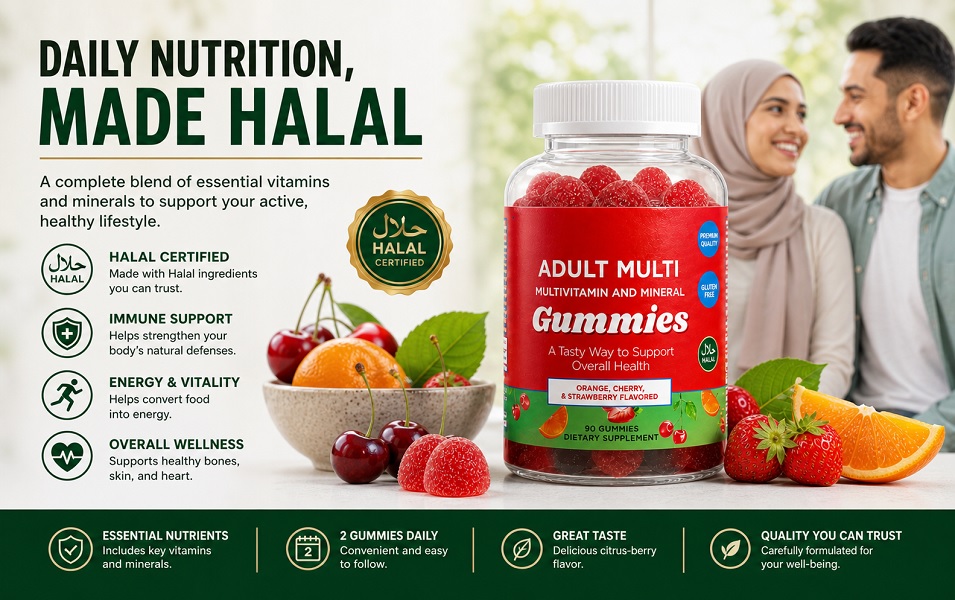
Gummies have become one of the most popular formats for adult supplementation. They are easy to chew, enjoyable to take, and come in a variety of natural fruit flavors. Halal gummies use pectin — a fruit-derived gelling agent — instead of gelatin, making them fully compliant without sacrificing taste or texture. Products like Nahraan Health’s Adult Multivitamin Gummies are a great example of halal-certified gummy vitamins crafted specifically for adult nutritional needs.
Capsules are a clean, flavorless option preferred by those who want a no-frills supplement. Halal-certified capsules use vegetarian or bovine gelatin (from halal-slaughtered cattle) shells rather than porcine derivatives. They are easy to swallow and suitable for those who prefer a traditional supplement experience.
Tablets offer a longer shelf life and are often the most cost-effective option. They are typically compressed powders that do not require a capsule shell at all, making them a straightforwardly halal-friendly option — provided that no haram binders or coating agents are used in the formulation.
Who Benefits Most From Ethical Halal Nutrition
While halal vitamins are specifically designed to meet the needs of Muslim consumers, the benefits of ethically sourced, clean-label supplements extend to a much broader audience. Vegans and vegetarians, for instance, often find that halal-certified supplements align closely with their own dietary principles since many halal products avoid animal derivatives or use plant-based alternatives.
People with certain religious backgrounds — including those following kosher dietary laws — may also find halal certification a reassuring secondary standard. Health-conscious consumers who prioritize transparency in manufacturing and ingredient sourcing will similarly benefit from the higher traceability and purity standards that halal certification demands.
Ultimately, halal vitamins represent a philosophy of wholesome, ethical consumption — what Islamic tradition calls Halalan Tayyiban, meaning that which is both permissible and genuinely good and pure. This dual standard serves not just the religious conscience but the physical body as well.
How to Read Labels and Verify Halal Claims
Knowing how to decode a supplement label is one of the most valuable skills you can develop as a health-conscious shopper. Here’s what to look for when evaluating any vitamin product:
- Certification logos: Look for recognized symbols from certification bodies such as IFANCA, Halal Food Authority (HFA), JAKIM, or the Islamic Food Council of Europe (IFCE)
- Capsule material: Check if it says “vegetarian capsule,” “cellulose,” or “pectin” — these are halal-safe
- Gelatin source: If gelatin is listed, the product should specify “bovine” or “fish gelatin from halal-slaughtered animals”
- Excipients and coatings: Look for clean, plant-based fillers and avoid shellac (derived from insects) used in tablet coatings
- Flavorings and colorings: Natural flavors should be free from alcohol-based carriers; avoid carmine (E120) and cochineal
If a product does not carry a visible certification mark and does not clearly disclose the source of its ingredients, it is safer to seek an alternative. Reputable brands are transparent about their sourcing because they understand that trust is foundational to their consumer base.
Making Halal Vitamins Part of Your Daily Wellness Routine
Consistency is everything when it comes to supplementation. No vitamin — halal or otherwise — can deliver results without regular, daily use. Integrating halal vitamins into your routine does not need to be complicated. Pairing your supplement intake with a fixed daily habit, such as breakfast, morning prayer, or your evening routine, helps ensure you never skip a dose.
It also pays to think about your specific health goals before selecting a product. Adults over 40 may prioritize Vitamin D3 and B12 for bone and cognitive health. Women of reproductive age often benefit from iron and folic acid. Those with high-stress lifestyles may lean toward B-complex vitamins to support sustained energy and mental clarity.
Children and elderly family members have distinct nutritional needs as well, and the growing halal supplement market now caters to all age groups with tailored formulations.
The Growing Global Demand for Ethical Supplementation
The global halal supplement market is experiencing rapid growth, driven by a Muslim population exceeding 1.8 billion people worldwide and a rising tide of ethically-minded consumers across all demographics. Brands that once ignored this segment are now investing heavily in halal certification and reformulating existing products to meet demand.
This surge in consumer awareness is not just a trend — it signals a permanent shift toward greater accountability in the health and wellness industry. As more manufacturers adopt transparent sourcing, clean-label practices, and third-party certification, halal vitamins are becoming the gold standard for ethical nutrition across the globe.
For those who believe that what you put into your body should be as pure as your intentions, choosing certified halal is not a limitation — it is a declaration of values, health, and conscious living.